
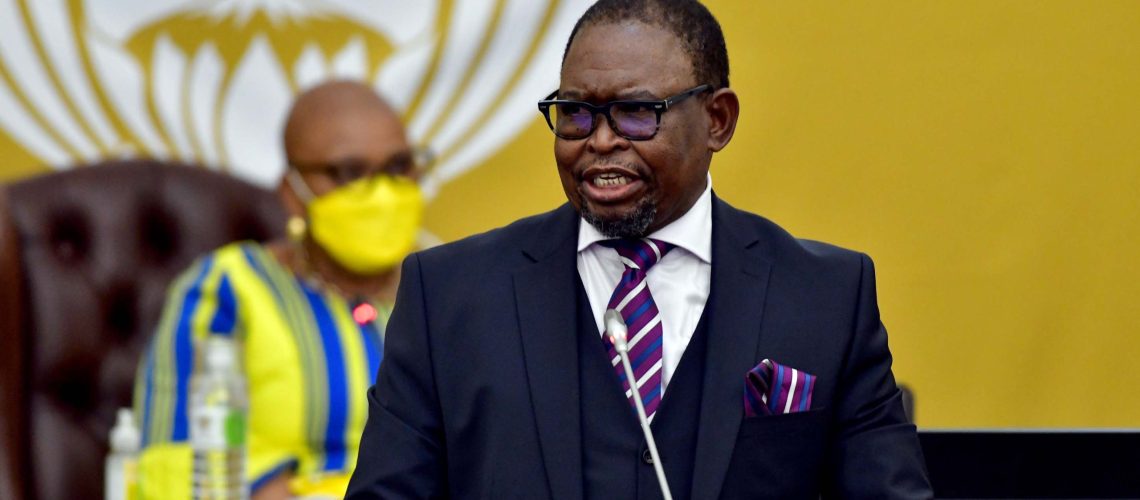
As South Africa prepares for the 2026 National Budget Speech to be delivered by Finance Minister Enoch Godongwana, Free SA calls on government to make a decisive shift toward fiscal responsibility, economic growth, and meaningful regulatory reform.
With debt levels rising, economic growth stagnating, and unemployment remaining among the highest in the world, this Budget presents a critical opportunity to reset South Africa’s economic trajectory. South Africans do not need another exercise in redistributing a shrinking pie. They need policies that grow the economy, expand opportunity, and restore confidence.
South Africa’s debt burden continues to crowd out essential spending and erode investor confidence. Government cannot continue down a path of expanding expenditure without structural reform.
Free SA urges the Minister to:
- Commit to credible expenditure restraint.
- Avoid tax increases that further burden households and small businesses.
- Prioritise efficiency and accountability in public spending.
- Signal a clear plan to stabilise and reduce the debt-to-GDP ratio.
Fiscal credibility is the foundation upon which investment, growth, and job creation are built. Without it, South Africa risks deeper economic stagnation and further credit downgrades.
South Africa does not suffer from a redistribution problem, it suffers from a growth problem.
For more than a decade, economic policy has leaned heavily toward expanding state intervention and reallocating limited resources. The result has been persistently low growth, high unemployment, and declining competitiveness.
This Budget must instead:
- Create a stable and predictable tax environment.
- Encourage entrepreneurship and private sector expansion.
- Incentivise investment, both domestic and international.
- Protect small and medium enterprises from disproportionate regulatory burdens.
Economic growth is not an abstract concept. It is the difference between opportunity and dependency, between rising living standards and generational stagnation.
South Africa must become a country where businesses want to operate and invest.
That requires:
- Reducing regulatory complexity that suffocates small firms.
- Streamlining compliance requirements.
- Removing artificial barriers to entry in key sectors.
- Reforming labour and licensing frameworks that discourage hiring.
Government must send a clear message: growth is welcome, enterprise is encouraged, and success will not be punished.
When regulation expands unchecked, it does not hurt large corporates first, it harms start-ups, family businesses, and entrepreneurs operating from kitchen tables across the country.
One of the clearest examples of regulatory stagnation is South Africa’s VAT registration threshold, which has not been adjusted since 2009 . In real terms, inflation has steadily pulled more and more micro-enterprises into an increasingly burdensome compliance net.
Free SA calls on the Minister to raise the compulsory VAT registration threshold to R2 million and index it annually to inflation. This simple reform would:
- Protect micro-enterprises.
- Encourage formalisation rather than informality.
- Reduce compliance burdens.
- Promote organic business growth.
Small businesses are repeatedly described as the “engine” of job creation. It is time to align policy with that rhetoric.
Free SA believes South Africa can become a high-growth, investment-friendly economy. We are not advocating for recklessness, nor for the abandonment of social responsibility. We are calling for balance, for policies that expand the economic pie rather than endlessly dividing it.
Commenting ahead of the Budget Speech, Gideon Joubert, spokesperson for Free SA, said:
“South Africa cannot tax and regulate its way to prosperity. If government is serious about reducing unemployment and restoring hope, it must prioritise growth above all else. This Budget is an opportunity to demonstrate that we have learned from past mistakes. Fiscal discipline, regulatory reform, and a pro-growth mindset are not luxuries, they are necessities.”
Free SA feels so strongly about empowering small businesses and protecting jobs that we have launched a national campaign calling for the VAT threshold to be raised to R2 million.
South Africans can join the campaign and make their voices heard here.
South Africa stands at a crossroads. Budget 2026 must be remembered as the moment government chose growth over stagnation, opportunity over bureaucracy, and prosperity over perpetual redistribution.